Understanding Muse Cells: A Breakthrough in Regenerative Medicine
Discover how Multilineage Differentiating Stress Enduring (Muse) cells are revolutionizing regenerative medicine with their unique ability to repair and regenerate damaged tissues naturally.
Dr. Pradeep Albert
Pioneer in Regenerative Medicine & Muse Cell Research
Dr. Pradeep Albert is a leading expert in regenerative medicine with over a decade of experience in stem cell research and clinical applications. While his early career focused on various stem cell therapies, his recent pioneering work has centered on Multilineage Differentiating Stress Enduring (Muse) cells and their therapeutic potential.
His groundbreaking research combines rigorous scientific methodology with practical clinical applications, advancing our understanding of how these remarkable cells can be used to treat various degenerative conditions and injuries. As a recognized authority in the field, Dr. Albert continues to push the boundaries of regenerative medicine, offering new hope for patients with previously untreatable conditions.
The Discovery of Muse Cells
2010
Japanese scientist Mari Dezawa and her research team discover Muse cells
Initial Findings
Muse cells identified as a unique bridge between stem cell research and practical therapeutic applications
Global Interest
Researchers worldwide, including Dr. Pradeep Albert, begin studying Muse cells
Muse Cells: Nature's Repair Specialists
Natural Occurrence
Muse cells exist naturally in various tissues, including bone marrow, skin, and fat tissue
Ready to Deploy
Unlike other stem cells, Muse cells are ready-to-deploy healing agents
Targeted Action
Muse cells spring into action when injury or disease occurs

Unique Properties of Muse Cells
Natural Homing Ability
Muse cells can find and target damaged tissues in the body
Spontaneous Differentiation
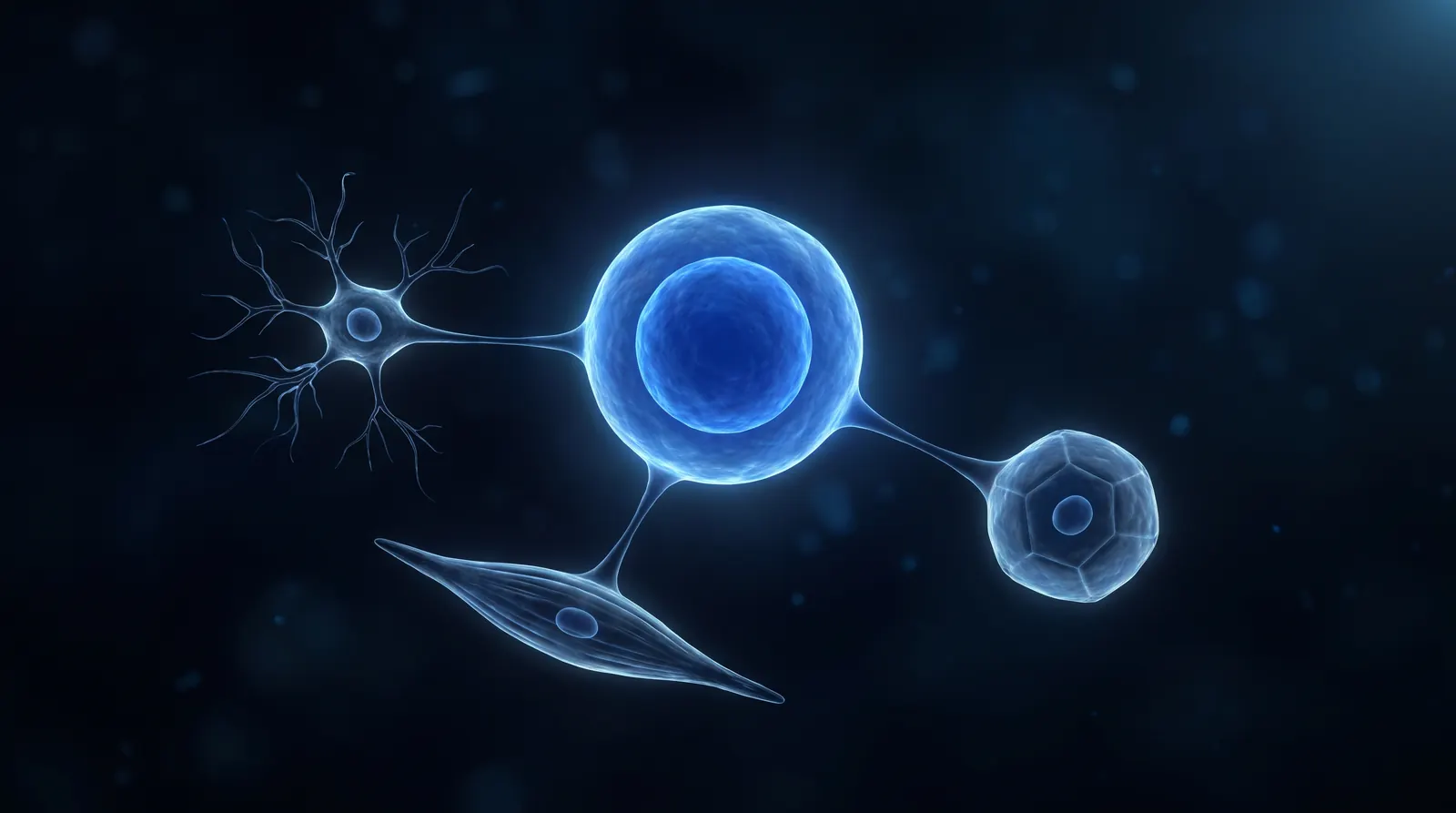
They can transform into the specific cell types needed for repair
Safety Profile
Muse cells exhibit a low risk of tumor formation
Immune Privilege
They can be transplanted without requiring extensive immunosuppression
Potential Applications of Muse Cell Therapy
Stroke
Promising results in treating stroke damage
Heart Conditions
Potential for repairing cardiac tissue
Neurological Disorders
Addressing various brain and nerve conditions
Radiation Injuries
Healing damage from radiation exposure
What Are Muse Cells?
Definition
Muse cells (Multilineage Differentiating Stress Enduring cells) are a unique type of naturally occurring stem cell that combines the best qualities of several cell types while avoiding many of their limitations.
Location
They exist naturally in our bodies, primarily in connective tissues and bone marrow.
Identification
Muse cells can be identified by a specific marker called SSEA-3 (stage-specific embryonic antigen-3) and are also positive for typical mesenchymal markers like CD105.

Muse Cells vs. Other Stem Cells
Characteristic | Muse Cells | Other Stem Cells |
|---|---|---|
Origin | Natural | Often artificially created or manipulated |
Differentiation | Spontaneous | Often requires careful direction |
Safety Profile | Low risk of tumor formation | Higher risk of tumor formation in some types |
Homing Ability | Natural homing mechanism | Often lacks targeted homing ability |
The Stress-Enduring Nature of Muse Cells
Stress Exposure
Muse cells encounter harsh conditions that damage other cells
Survival Mechanisms Activate
Production of serine protease inhibitors (serpins) and 14-3-3 proteins
Protection and Survival
These proteins act as cellular bodyguards, preventing premature cell death
Enhanced Therapeutic Potential
Stress tolerance allows Muse cells to function in damaged tissues
Stress Exposure
Muse cells encounter harsh conditions that damage other cells
Survival Mechanisms Activate
Production of serine protease inhibitors (serpins) and 14-3-3 proteins
Protection and Survival
These proteins act as cellular bodyguards, preventing premature cell death
Enhanced Therapeutic Potential
Stress tolerance allows Muse cells to function in damaged tissues

Immune Privilege of Muse Cells
HLA-G Expression
Muse cells express high levels of human leukocyte antigen-G (HLA-G)
Natural Protection
HLA-G is the same molecule that prevents a mother's immune system from rejecting a developing fetus
Transplantation Advantage
Allows Muse cells to be transplanted between different individuals without requiring aggressive immunosuppression
Clinical Benefit
Simplifies treatment processes and reduces risks associated with immunosuppression

Homing Ability of Muse Cells
Tissue Damage
Injured tissue releases sphingosine-1-phosphate (S1P) as a distress signal
Signal Detection
Muse cells, equipped with S1PR2 receptors, detect the S1P signals
Navigation
Muse cells navigate through the bloodstream towards the source of S1P
Targeted Arrival
Cells accumulate at the site of damage, ready to begin repair processes
Adhesion-Suspension Transition of Muse Cells
Attached State
When attached to surfaces in the body, Muse cells maintain a stable, quiescent state
Transition
Upon detachment and entering circulation, Muse cells undergo remarkable changes
Suspended State
Pluripotency-related genes become more active, enhancing regenerative capabilities
Differentiation Abilities of Muse Cells
Spontaneous Differentiation
Muse cells can sense their environment and respond appropriately
Multi-lineage Potential
Can develop into cells from all three germ layers
Targeted Response
Differentiate into the exact type of cell needed in damaged tissue
Versatile Application
Potential to replace virtually any cell type in the body
Spontaneous Differentiation
Muse cells can sense their environment and respond appropriately
Multi-lineage Potential
Can develop into cells from all three germ layers
Targeted Response
Differentiate into the exact type of cell needed in damaged tissue
Versatile Application
Potential to replace virtually any cell type in the body
Sources of Muse Cells
Bone Marrow
Muse cells make up about 0.03% of the mononuclear cell population
Adipose Tissue
Fat tissue is a rich source of Muse cells
Dermis
Skin tissue contains Muse cells
Umbilical Cord
A valuable source of Muse cells
Mesenchymal Stem Cell Populations
Muse cells can be isolated from commercially available MSC cultures
Isolation Methods for Muse Cells
Fluorescence-Activated Cell Sorting (FACS)
Uses SSEA-3 marker for high purity isolation
Magnetic-Activated Cell Sorting (MACS)
Faster method using magnetic beads targeting SSEA-3
Long-term Trypsin Incubation (LTT)
Economical method leveraging Muse cells' stress tolerance
Fluorescence-Activated Cell Sorting (FACS)
Uses SSEA-3 marker for high purity isolation
Magnetic-Activated Cell Sorting (MACS)
Faster method using magnetic beads targeting SSEA-3
Long-term Trypsin Incubation (LTT)
Economical method leveraging Muse cells' stress tolerance

Therapeutic Applications of Muse Cells
Stroke
Muse cells can cross the blood-brain barrier and differentiate into neural cells, contributing to functional recovery
ALS
Potential to integrate into the spinal cord, differentiate into neurons and supporting cells, and help preserve motor function
Gastrointestinal
Shown to repair radiation-induced intestinal injury and restore function
Cardiovascular
Demonstrated ability to navigate to damaged heart tissue, differentiate into cardiac cells, and improve heart function
Muse Cells in Chronic Conditions
Liver Diseases
Muse cells have shown the ability to differentiate into functional hepatocytes and contribute to tissue repair in chronic liver conditions
Anti-inflammatory Properties
Muse cells exhibit anti-inflammatory effects, helping to reduce chronic inflammation in various conditions
Anti-fibrotic Action
These cells demonstrate anti-fibrotic properties, potentially slowing or reversing tissue scarring in chronic diseases

Muse Cells in Skin Conditions and Wound Healing
Skin Cell Differentiation
Muse cells can differentiate into various skin cell types
Tissue Regeneration
Promote regeneration of damaged skin tissue
Wound Healing
Accelerate the healing process in various types of wounds
Treatment of Genetic Disorders
Potential in treating conditions like epidermolysis bullosa

The Muse Cell Therapy Process
Cell Extraction
Muse cells are isolated from donor tissue
Preparation
Cells are processed and prepared for administration
Administration
Typically given intravenously to the patient
Homing and Repair
Cells navigate to damaged areas and begin repair processes
Clinical Trials with Muse Cells
2018First Trials Begin
Clinical trials with Muse cells initiated for various conditions
5+Conditions Studied
Including acute myocardial infarction, stroke, spinal cord injury, epidermolysis bullosa, and ALS
0Major Adverse Effects
Remarkable safety profile observed across multiple studies
Advantages of Muse Cells Over Other Stem Cell Types
Natural Existence
Muse cells exist naturally in the body, requiring no genetic modification
Simple Processing
Minimal manipulation required before use, making treatment more straightforward
Safety Profile
Natural growth limitations and non-tumorigenic properties enhance safety
Immune Compatibility
Expression of HLA-G allows use without extensive immunosuppression
Smart Targeting
Ability to home to damaged tissue and spontaneously differentiate
The Clinical Translation Process for Muse Cells
Cell Sourcing and Preparation
Isolation from readily available tissues like bone marrow or adipose tissue
Standardized Protocols
Development of consistent procedures for isolation, characterization, and quality control
Treatment Protocol Development
Determining optimal cell numbers, timing, and delivery methods for different conditions
Regulatory Pathway
Navigating approval processes for clinical trials and eventual therapeutic use

Manufacturing and Scale-up Considerations
Optimizing Isolation
Developing efficient methods to isolate Muse cells in larger quantities
Storage Methods
Creating appropriate storage techniques to maintain cell viability and properties
Quality Control
Establishing rigorous measures to ensure consistency and safety of cell products
Distribution Networks
Developing systems for efficient delivery of Muse cell therapies to clinics and hospitals
Economic Aspects of Muse Cell Therapy
Manufacturing Costs
Developing cost-effective production methods to make treatments more accessible
Storage and Transportation
Optimizing logistics to maintain cell quality while minimizing costs
Treatment Administration
Streamlining the process of cell therapy delivery to reduce healthcare costs
Future Implications for Medicine
Paradigm Shift in Treatment
Moving towards regenerative approaches in medicine
Expanded Treatment Options
Addressing previously untreatable conditions
Personalized Medicine
Tailoring treatments based on individual patient factors
Preventive Applications
Potential use in preventing or slowing degenerative conditions
Paradigm Shift in Treatment
Moving towards regenerative approaches in medicine
Expanded Treatment Options
Addressing previously untreatable conditions
Personalized Medicine
Tailoring treatments based on individual patient factors
Preventive Applications
Potential use in preventing or slowing degenerative conditions
Expert Perspectives on Muse Cell Therapy
Cautious Optimism
Researchers encouraged by consistent safety profile and promising early results
Ongoing Research Priorities
Focus on understanding mechanisms, identifying new applications, and optimizing treatments
Clinical Integration
Anticipation of Muse cell therapy becoming standard in various treatment protocols
Global Health Impact
Potential to address age-related degenerative conditions and injuries worldwide